Lighting plays a crucial role in video production, whether you’re creating content for YouTube, commercials, films, or even social media. The right lighting setup can elevate your video quality, helping you deliver visually stunning content that captures your audience’s attention. In this blog, we will explore the features of studio lights for video shooting, offer buying tips, and provide a list of the best-selling studio lights available in the market today.
Understanding Studio Lighting for Video Production
Before diving into specific products, it’s important to understand the role of lighting in video shooting. Lighting in video production serves two primary purposes:
- Visibility: Proper lighting ensures that your subject, whether it’s a person, object, or scene, is clearly visible to the camera. Poor lighting can result in underexposed or overexposed footage that detracts from the quality of your video.
- Mood and Aesthetics: The way you light a scene can completely change its tone. A bright and well-lit setup is ideal for upbeat, professional shoots, while softer lighting can create a more intimate or moody feel. Different lighting techniques can help convey emotions or themes, giving your video a professional touch.
Types of Studio Lights for Video Shooting
Studio lights come in various forms, and understanding these different types will help you make a more informed decision. Here are some of the most common studio light types used in video production:
1. LED Lights
LED lights have gained immense popularity in recent years due to their energy efficiency, long lifespan, and versatility. They offer various colour temperatures and adjustable brightness, making them ideal for both video shooting and photography.
Pros of LED Lights:
- Energy-efficient
- Long-lasting
- Adjustable colour temperature (cool to warm)
- Can be dimmed to control light intensity
- Produce less heat, making them safer for prolonged use
2. Softbox Lights
Softboxes are designed to diffuse light and provide a soft, even spread. They are often used to soften harsh shadows and give the subject a more flattering appearance. Softboxes are great for portrait or interview-style shoots.
Pros of Softbox Lights:
- Softens and diffuses light
- Reduces harsh shadows
- Ideal for close-up shots
- Versatile and widely used in different video types
3. Ring Lights
Ring lights are circular lights that produce uniform lighting around the subject. They’re particularly popular for beauty, makeup, and vlogging videos, as they minimize shadows on the face and give a smooth, even glow.
Pros of Ring Lights:
- Creates even lighting around the subject
- Flattering for close-up shots
- Minimizes shadows on faces
- Adjustable brightness and colour temperature
4. Umbrella Lights
Umbrella lights are similar to softboxes in that they diffuse light, but they work by reflecting light off the umbrella’s surface. They are often used for larger setups or when you need to light a wider area.
Pros of Umbrella Lights:
- Provide soft, diffuse lighting
- Portable and easy to set up
- Ideal for group shots or larger subjects
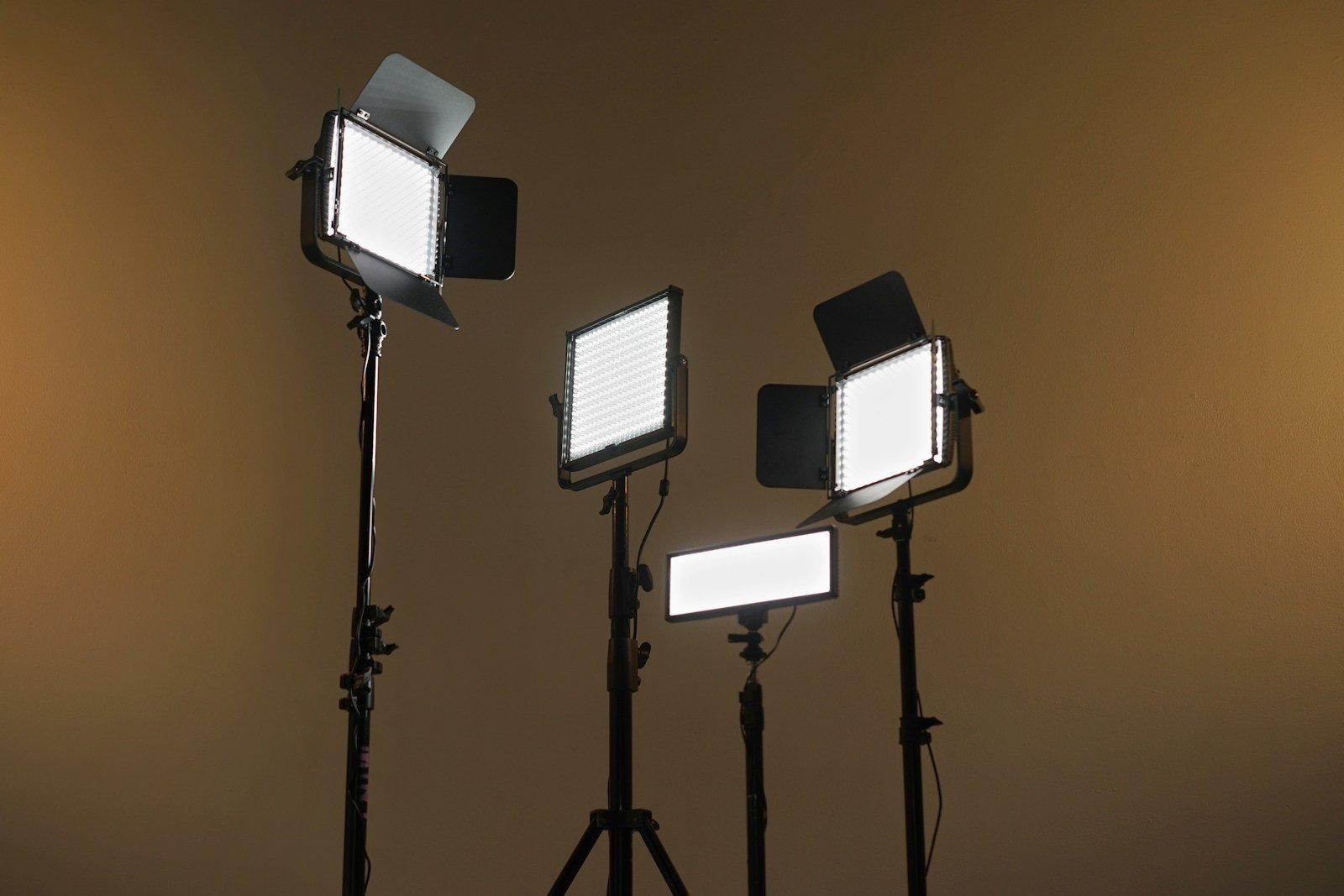
5. Panel Lights
LED panel lights are thin, rectangular lights that offer even, soft lighting. They are versatile and can be used as a key light, fill light, or backlight, depending on the scene’s needs.
Pros of Panel Lights:
- Compact and lightweight
- Adjustable colour temperature
- Versatile and easy to control
- Often include dimming features
Features to Look for When Buying Studio Lights
When shopping for studio lights for video shooting, there are several features you should consider to ensure you choose the best lighting setup for your needs.
1. Brightness Control
Being able to adjust the brightness of your lights allows you to have full control over the intensity of the light. This is crucial when shooting different scenes and ensuring your subject is properly lit without overexposing the image.
2. colour Temperature
The ability to adjust the colour temperature (measured in Kelvin) is important for achieving the right mood or atmosphere. A cooler temperature (around 5500K) gives a daylight effect, while warmer tones (around 3000K) create a cozy or intimate atmosphere.
3. Dimmability
Lights that can be dimmed give you flexibility in adjusting the lighting based on the scene’s requirements. Being able to dim your lights can help you avoid harsh lighting and create subtle effects.
4. CRI (colour Rendering Index)
The CRI measures how accurately a light source displays the colour s of your subject. For video production, a CRI rating of 90 or above is ideal, as it ensures that your footage will have true-to-life colour representation.
5. Portability
If you’re working on location or need to move your setup frequently, lightweight and portable lights are essential. Many modern studio lights are designed to be compact and easy to transport, so you don’t have to worry about heavy gear.
6. Power Source
Some lights are powered by batteries, while others require a constant connection to a power outlet. If you’re shooting outdoors or in areas without easy access to electricity, battery-powered lights can be a huge advantage.
7. Heat Output
Lights that produce a lot of heat can be uncomfortable during long shooting sessions and may even damage your equipment. LED lights are known for their low heat output, making them a popular choice for studio setups.
8. Mounting Options
Ensure that the studio lights you choose have the right mounting options. Many lights come with adjustable stands, but you may also want options like wall mounts or ceiling mounts for added flexibility in your studio setup.
Buying Tips for Studio Lights
1. Consider Your Space
The size and layout of your shooting space are essential factors when choosing your lights. Larger spaces require more powerful lighting or a combination of different types of lights, while smaller spaces may benefit from softbox or ring lights for a more controlled setup.
2. Determine Your Budget
Studio lights can range from affordable options to high-end professional-grade lights. Set a budget before you begin shopping and consider whether you need additional accessories, such as light stands, diffusers, and remote controllers, which can add to the overall cost.
3. Think About Versatility
If you plan to shoot various types of content, look for versatile lights that can be used in different setups. Adjustable lights with multiple colour temperature settings and dimming capabilities will give you the flexibility to adapt to various shooting conditions.
4. Research Brand Reputation
When purchasing studio lights, it’s essential to choose trusted brands known for their reliability and quality. Brands like Neewer, Godox, and Aputure are highly regarded in the industry, offering great value for the price.
Best-selling Studio Lights for Video Shooting
Here’s a list of the best-selling studio lights for video shooting, which are highly recommended by both professionals and beginners:
Best-Selling Studio LED Lights:
No products found.
Best-Selling Studio Softbox Lights:
No products found.
Best-Selling Studio Umbrella Lights:
No products found.
Best-Selling Studio Panel Lights:
No products found.
Conclusion
The right studio lighting can dramatically enhance the quality of your video production. Whether you’re shooting at home, in a studio, or on location, understanding the different types of lights and their features will help you make an informed decision. Remember to consider factors like brightness, colour temperature, and portability when purchasing your studio lights. With the right gear, you can create professional-level content that will engage and impress your audience.
Create magic at our state-of-the-art Virtual Studio—perfect for video shoots, corporate films, training videos, live-events, webcasts and more! Book Now 🎥✨
Disclosure: As an Amazon Associate, Virtual Studio earns from qualifying purchases. This comes at no additional cost to you and helps support our work.